RAG Is a Data Product, Not a Prompt: An Engineering Blueprint for Reliable Answers

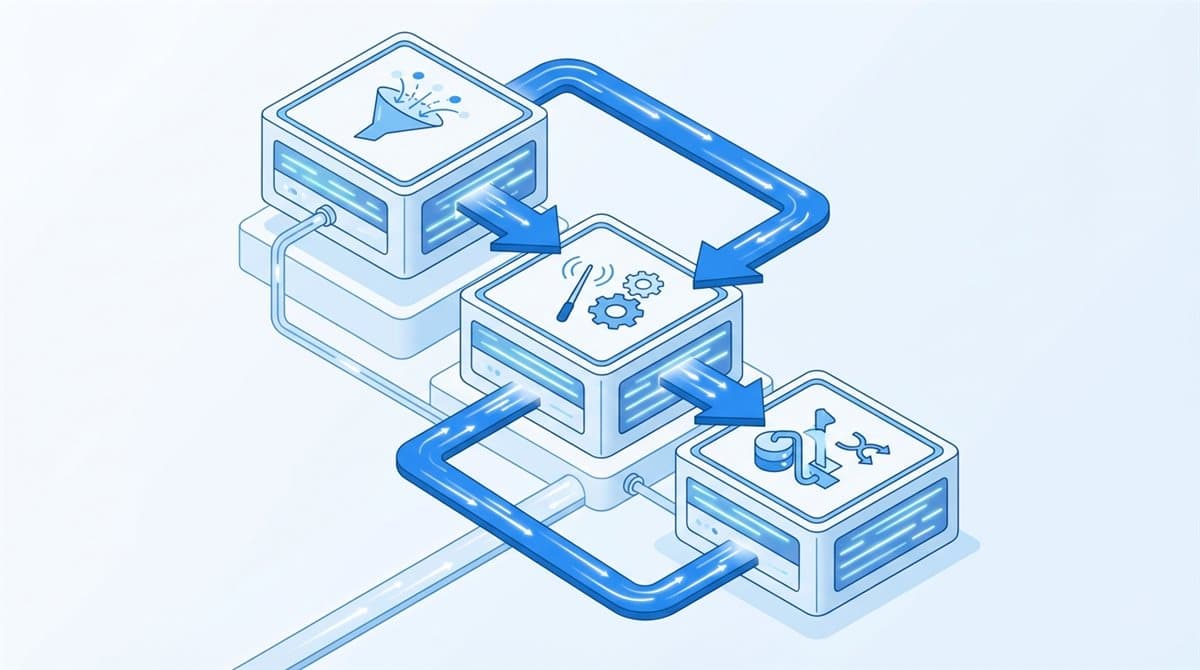
Figure: Conceptual overview of the platform.
Retrieval-augmented generation (RAG) combines a language model with external retrieved evidence. That design can make answers more current and grounded than a model operating from parameters alone, but it also moves a familiar data-engineering problem into the answer path: the quality of the outcome is bounded by the quality, coverage, and traceability of the retrieved evidence.
Treating RAG as a prompt pattern is therefore a category error. In production, it is a data product with source ownership, ingestion contracts, document lifecycle rules, retrieval evaluation, and an explicit failure policy. A polished answer that cites the wrong passage is still an unreliable system.
Start with an evidence contract
Before selecting an embedding model or a vector store, define what evidence the system is allowed to use. The contract should name authoritative sources, document owners, permissible freshness, access rules, retention expectations, and the metadata needed to show a user where an answer came from.
This is the same discipline used for trusted analytical datasets. A source without an owner, effective date, security classification, or ingestion timestamp may still be searchable, but it is hard to govern and nearly impossible to audit when an answer is challenged.
- Source identity: system of record, owner, version, publication date, and access classification.
- Content lifecycle: ingestion cadence, deletion propagation, supersession rules, and a measurable freshness target.
- Retrieval trace: document identifier, chunk identifier, score, retrieval timestamp, and the answer version that used it.
Design the ingestion path as a repeatable pipeline
RAG ingestion should be observable from source extraction to embedding and index publication. Normalization, parsing, chunking, deduplication, metadata enrichment, embedding, and indexing are distinct stages with distinct failure modes. Combining them into one opaque job makes it difficult to detect stale content, duplicate passages, or partial index writes.
Chunk boundaries are a retrieval decision, not a formatting detail. They should preserve the smallest unit that can answer the expected question while retaining enough context to avoid misleading fragments. Headings, section paths, document version, and permissions should travel with the chunk as metadata.
Measure retrieval before judging generation
An answer-quality score alone hides the source of failure. Evaluate retrieval separately with a reviewed question set: did the system retrieve at least one relevant passage in the top k results, did it respect access filtering, and did it return the current version of the source? Only then evaluate whether the model used the supplied evidence faithfully and answered the question clearly.
This separation creates actionable work. Low retrieval recall points to corpus coverage, chunking, query rewriting, filters, or ranking. Poor groundedness despite good retrieval points to prompt instructions, context assembly, model behavior, or abstention policy. These are different engineering interventions and should not share one vague dashboard metric.
The retrieval layer itself deserves explicit evaluation of recall, relevance, filtering, and latency, as outlined in Vector Search Is Retrieval Design.
- Retrieval: recall@k, ranking quality, freshness, and permission-filter correctness.
- Generation: citation support, answer completeness, refusal quality, and unsupported-claim rate.
- Operations: index lag, ingestion success rate, query latency, cost per request, and source-level coverage.
Keep freshness, permissions, and lineage in the query path
A RAG system should not retrieve from a static snapshot without understanding whether the underlying content has changed. Source updates, revocations, and permission changes must propagate to the retrieval layer. Otherwise, a technically successful query can return a document that is no longer valid or that the requesting user should not be able to see.
Make those controls testable. Use retrieval tests that include changed documents, deleted documents, different access roles, and time-sensitive policies. The expected result is not always an answer: in some cases the right outcome is no context returned and a clear explanation that the information is unavailable.
Production rule: make uncertainty visible
A strong RAG system is allowed to say that its evidence is insufficient. The alternative—answering confidently from weak retrieval—creates an appealing but unsafe user experience. Use thresholds and explicit policies to ask for clarification, surface the retrieved sources, or decline to answer when the evidence contract is not met.
That approach fits enterprise data work: accuracy is not a styling choice applied at the end. It is designed into ownership, lineage, validation, observability, and controlled release from the beginning.
For systems that pair retrieved evidence with tool use, those controls should extend to bounded authority and reviewable execution in Agentic AI Needs Operational Guardrails.